
The bowl looks clear. You’ve tried the plunger, and the water eventually goes down. Then the next flush sends it climbing again.
Something still isn’t right.
If water is approaching the rim, don’t flush again. If sewage is coming through another drain or spilling onto the floor, stop using your plumbing fixtures and contact Rooter Hero for emergency plumbing help in Orange.
A clear bowl doesn’t mean the toilet’s drain is clear. An obstruction can sit inside the toilet’s curved trapway or farther down the connected piping, out of sight and beyond a plunger’s reach. If only this toilet is affected, the problem may be close to the fixture; if wastewater also returns through the shower or other drains, connected drainage needs attention.
In Orange, the history of the house can contribute to plumbing issues, too. Old Towne’s historic homes can have a freshly remodeled bathroom without every section of buried drainage having been replaced. If your home still has older sewer piping, roots entering through an opening or a restriction at a deteriorated joint may require inspection beyond the toilet itself. The question isn’t simply how old the toilet is. It’s what’s beneath it.
That doesn’t mean an older home needs a new sewer line. A hidden obstruction inside the toilet is still a possible scenario.
Why a Toilet Can Back Up When the Bowl Looks Clear
It’s easy to see the water in the toilet bowl. Unfortunately, it’s not as simple to see the entire passage beneath it.
A toilet has a curved trapway built into the porcelain. Beyond that passage, wastewater enters a drain that connects with other plumbing before reaching the sewer line. An object caught around the bend or a restriction beneath the floor won’t necessarily be visible from above.
A partial blockage can be particularly misleading. Water squeezes past it slowly, so the bowl drains after several minutes and appears normal again. But the next flush delivers water faster than the restricted passage can carry it away.
That’s why “it eventually drains” isn’t a good reason to keep using it.
A weak flush is a different symptom. If waste barely moves and the bowl never rises unusually high, the toilet’s tank water level or flushing components may need attention. Water leaking from the tank is another separate problem. When bowl water climbs toward the rim or wastewater returns through the drain, the question becomes where the outgoing flow is being restricted.
What the Symptoms Can Tell You
A toilet that backs up after its own flush gives a plumber different clues than one that bubbles when the washing machine drains. Whether the problem stays in one fixture or shows up elsewhere helps narrow down where the restriction may be.
Use the guide below to compare what you’ve already noticed. Don’t flush again or run an appliance to test it; that can turn a contained backup into an overflow.
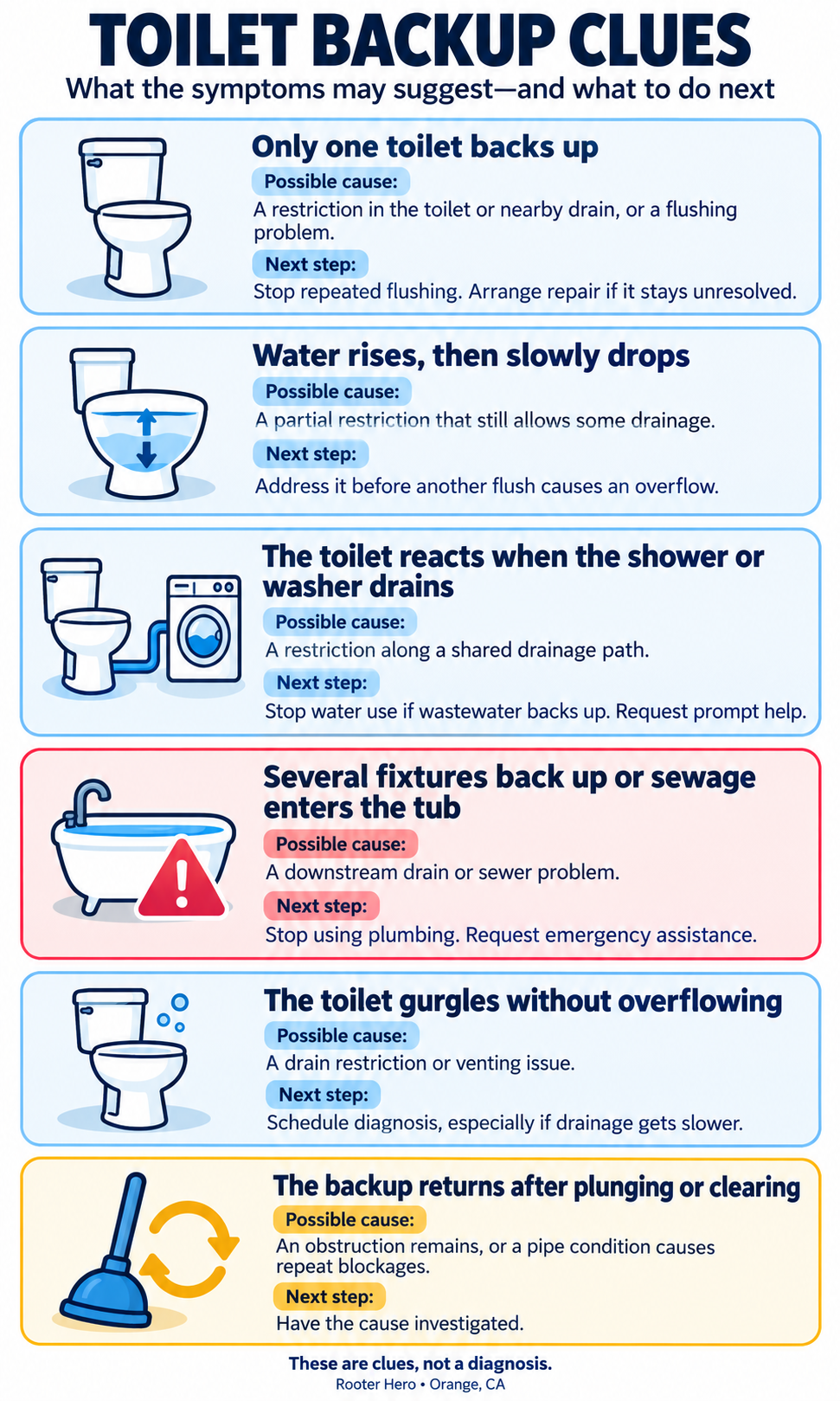
Here’s what to look for when trying to determine the potential cause of a backed-up toilet:
Only the toilet backs up: An obstruction inside the toilet or its nearby drain is possible.
The toilet and shower back up together: A restriction in their shared drainage may be involved; this doesn’t establish that the main sewer line is blocked.
Fixtures in different rooms back up: Stop using the plumbing and request help, because the restriction may affect drainage serving a larger part of the property.
These patterns help narrow the investigation. They don’t locate the blockage or establish that a pipe needs replacement.
What Could Be Causing the Backup?
A backed-up toilet can have one of several causes. The restriction may be hidden inside the toilet or farther along the drain, where plunging won’t necessarily reach it. The causes below explain why a clear-looking bowl can still back up and why the problem sometimes returns after an apparent fix.
A Hidden Obstruction Inside the Toilet
A small object can lodge in the trapway and catch toilet paper while still letting some water pass. In this case, the bowl may look completely clear.
Plunging may seem like the logical fix, but unfortunately, it doesn’t always remove the object. It may shift the obstruction enough to restore drainage temporarily, which explains why a toilet can work for a few flushes and then back up again. But it can also shift it into a position that makes the problem even worse.
If only one toilet is affected, the fixture itself remains a reasonable place to investigate. Replacing it without checking the connected drain, however, can leave the real problem untouched.
A Blockage in the Bathroom’s Shared Drain
In some situations, the problem may be beyond the toilet but still confined to the bathroom.
Once the toilet’s drain joins another fixture’s drain, a blockage farther downstream can affect both. You might notice the shower draining slowly, followed by water moving in the toilet bowl when the shower is used.
This observation is important. A toilet and tub backing up together can indicate a shared branch-line problem, but it doesn’t automatically prove the main sewer line beneath the yard is blocked. A plumber needs to establish where the restriction actually sits.
A Restriction Farther Down the Sewer Line
If fixtures in different rooms are backing up, the investigation needs to extend beyond one bathroom.
Paper towel, wipes, and accumulated debris can restrict a sewer line. Roots can enter through openings in underground piping and interfere with flow. Wastewater then has less room to leave the property, and adding more water can push it back toward connected fixtures.
Rooter Hero’s plumbing service statistics show that toilet clogs accounted for 12.6% of completed plumbing jobs and mainline sewer clogs accounted for 13.9% during the 12 months ending May 2026. The figures cover its California and Arizona markets; they aren’t Orange-specific rates or a diagnosis of your backup. Finding the cause depends on which fixtures are affected and what the inspection reveals.
Pipe Damage That Encourages Repeat Blockages
Sometimes clearing the line can restore flow without correcting the real issue causing the blockage.
A displaced joint can catch material. A sagging section can hold wastewater and debris instead of allowing them to move freely. Deteriorated piping may create another restriction.
A backup that repeatedly returns after clearing deserves a closer look. That doesn’t mean an entire excavation is automatically required. But it does mean that the next step should establish the pipe’s condition rather than assume another round of plunging will solve it.
A Plumbing Vent Problem
Drainage depends on airflow as well as an open pipe. Plumbing vents help regulate pressure in the drainage system.
A vent problem can contribute to gurgling or poor drainage, but those symptoms also occur with drain restrictions. Hearing bubbles in the toilet is not enough to diagnose a blocked roof vent.
Leave rooftop inspection to a professional. Climbing up with a garden hose is a poor response to an unexplained bathroom backup.
A Shared Building Drain or Public Sewer Problem
In a condo or apartment, the affected drainage may serve more than your unit. Notify the property manager when other units are experiencing similar symptoms or wastewater continues returning after you’ve stopped using your own fixtures.
When to Report a Sewer Problem to the City of Orange
If nearby homes are experiencing backups too, or you notice sewage surfacing in the street, report the situation to the City of Orange as well as telling your plumber. The city lists (714) 538-1961 for reporting sanitary sewer overflows and after-hours emergencies. Those observations don’t establish where the blockage is, but they give the responding crew information beyond what’s happening inside your bathroom.
For a backup confined to your home, contact Rooter Hero for emergency plumbing help in Orange. A plumber can investigate the toilet and connected drainage; a suspected public sewer problem may also require the city’s response.
What You Can Do Before a Plumber Arrives
First, stop flushing. A bowl that drained slowly once may overflow on the next attempt.
If tank water is continuing to enter the bowl, gently close the toilet’s supply valve if it turns freely. Don’t force a stuck valve. Shutting off that supply can stop additional tank-fed water, but it cannot stop sewage returning through the drain.
For a problem isolated to one toilet, a brief attempt with a flange plunger may be reasonable if there’s room in the bowl and no drain chemicals have been added. Stop if the water rises or another fixture reacts. Repeated, forceful plunging is not a substitute for finding a deeper restriction.
Skip chemical drain cleaners and boiling water. Don’t open a sewer cleanout that may contain backed-up wastewater.
If sewage has reached the floor, keep children and pets out of the area and avoid contact. Extensive contamination calls for appropriate cleanup, not simply wiping the floor dry.
While you wait, make a note of what happened, including whether the backup followed a flush, whether the washer was draining, and whether the toilet had been cleared recently. Those details can help the technician choose where to begin.
When Should You Call an Emergency Plumber in Orange, CA?
An active overflow warrants immediate help. So does sewage entering a tub or shower, or several fixtures backing up together.
Stop using sinks and water-using appliances when a shared drain appears blocked. Even water from another room may reach the same restricted pipe and worsen the backup.
A contained problem still deserves attention. A toilet that rises and slowly drains after every flush is giving you warning while the water is still inside the bowl. Arrange diagnosis before someone forgets and flushes again.
Rooter Hero provides 24-hour emergency plumbing service in Orange. Call (866) 941-8214 for emergency plumbing help in Orange. Tell the dispatcher whether wastewater is still rising and whether another drain is affected.
How a Plumber Finds the Cause
The symptom history helps determine whether to begin with the toilet or investigate connected drainage.
A technician can assess the fixture and accessible connections, then select equipment appropriate to the suspected obstruction. A toilet auger may address a fixture-level blockage. A restriction farther downstream requires a different approach.
For recurring problems or suspected pipe damage, a camera inspection may help establish what is happening inside the line. Heavy blockage can prevent a useful view, so some clearing may be needed first.
Treatment should follow the findings. Drain snaking and hydro jetting serve different purposes, and the condition of the pipe matters. A backup alone is not a reason to recommend either method, much less sewer replacement.
Preventing Another Toilet Backup
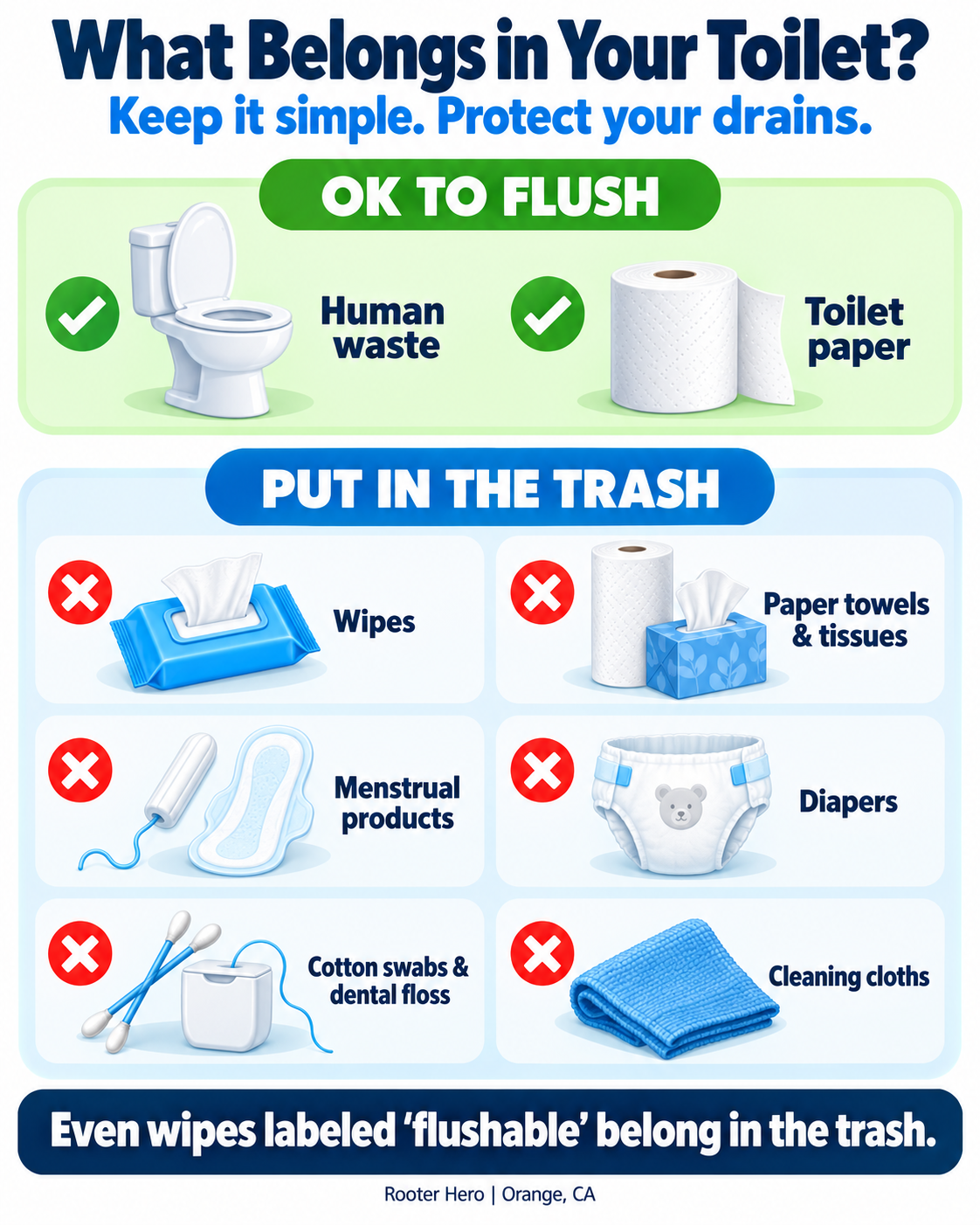
Keep wipes out of the toilet, including products labeled “flushable.” Human waste and toilet paper belong there; cleaning cloths and hygiene products belong in the trash.
Grease poured into a kitchen sink can also affect connected drainage farther downstream. Let it cool in a suitable container and dispose of it rather than sending it through the pipes.
If a backup returns, have the cause investigated. A maintenance schedule should reflect the condition of your plumbing and what the inspection reveals. Another temporary clearing may leave you facing the same issue again next month.
Frequently Asked Questions
Why does my toilet back up and then drain slowly?
A partial obstruction may let water pass slowly while restricting the larger flow from a flush. The bowl eventually emptying does not establish that the drain is clear.
Can my toilet still be clogged if a plunger doesn’t help?
Yes. An object may be lodged inside the trapway, or the restriction may be beyond the plunger’s effective reach. Failed plunging doesn’t rule out a blockage.
Why does my toilet back up when the washing machine drains?
The washer’s discharge may encounter a restriction in piping shared with the toilet. Wastewater can then return through a connected fixture. Stop using the washer if it triggers a backup and request a diagnosis.
Will shutting off the toilet’s water stop a sewer backup?
No. It stops fresh water entering the toilet tank. Wastewater returning through connected drainage can still enter the bowl.
Can I use another toilet while this one is backing up?
Don’t assume it’s safe. If multiple fixtures are affected or the cause is unclear, another toilet may discharge into the same blocked line. Pause use and ask the responding plumber.
Does Rooter Hero handle emergency toilet backups in Orange?
Yes. Rooter Hero offers 24-hour emergency plumbing service in Orange, CA. If wastewater is rising or spreading onto the floor, call (866) 941-8214 and describe what’s happening before trying another flush.