A slow drain is easy to ignore. A toilet that won't flush or a sink that's backing up sewage is not. The difference between the two is often just a matter of time — and in Orange County, that timeline can be shorter than you'd expect.
Between the region's aging plumbing infrastructure (many homes in cities like Anaheim, Buena Park, and Garden Grove still have original cast iron or galvanized drain lines from decades past), the hard mineral-rich water that accelerates buildup inside pipes, and the mature tree canopies in older neighborhoods whose roots actively seek out sewer lines — clogs here tend to develop faster and go deeper than a plunger can reach.
This guide walks you through how to spot a main drain line clog, what you can reasonably tackle yourself, what to skip, and what a professional plumber will do when it's time to call one in.
Signs Your Main Drain Line Is Clogged
Individual drain clogs — a slow bathroom sink, a sluggish shower — usually stay isolated to one fixture. A clogged main drain line is a different animal. Because every drain in your home eventually feeds into it, a blockage deep in the line tends to announce itself in multiple places at once.
Watch for these warning signs:
- Multiple fixtures draining slowly or backing up at the same time — the strongest indicator of a main line issue
- Gurgling sounds from drains or toilets when water is running elsewhere in the house
- Sewage odors coming up through floor drains, sinks, or toilets
- Water backing up into the bathtub or shower when you flush the toilet
- Washing machine or dishwasher discharge causing overflow in nearby floor drains or sinks
- Wet patches in the yard along the path of your sewer line, which can signal a break or root intrusion underground
The more fixtures affected, the deeper and more serious the blockage is likely to be. A clog limited to the kitchen sink is probably just upstream of that fixture. A clog affecting three bathrooms and your laundry room is in the main line — and needs more than a bottle of drain cleaner.
DIY Steps Worth Trying First
For mild or early-stage clogs that haven't yet spread to multiple fixtures, a few home remedies can help restore flow.
- Flush with hot water. After every use of a sink or dishwasher, run hot water for 30–60 seconds. This helps push grease and soap residue further down the line before it has a chance to cool and solidify.
- Baking soda and vinegar flush. Pour several tablespoons of baking soda into the drain, followed by a cup of white vinegar. The fizzing reaction breaks up light organic buildup along the pipe walls. Let it sit for 15–20 minutes, then flush with hot water. This works best as a regular maintenance habit rather than a fix for an active clog.
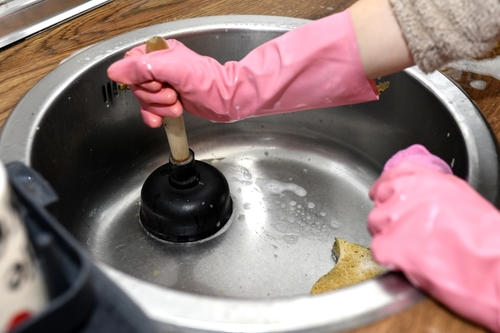
- Plunger. A good plunger creates suction that can dislodge a shallow blockage. Make sure there's enough water in the fixture to cover the plunger head and create a seal. For toilets, use a flange plunger — the kind with a rubber sleeve that fits into the drain opening — rather than a flat-bottomed cup plunger.
- Manual drain snake. A hand-cranked drain snake (also called an auger) feeds a flexible cable down the drain until it reaches the obstruction, then breaks through it or grabs it for removal. Rental-grade models are available at hardware stores and work well on clogs within 20–25 feet of the fixture. Anything deeper typically requires a motorized professional unit.
What to Skip: Liquid Drain Cleaners
Chemical drain cleaners are widely available and widely misused. The caustic chemicals in these products can dissolve organic material — but they don't discriminate. Over time, they also eat away at pipe walls, accelerate corrosion in older metal pipes, and can cause chemical reactions inside galvanized steel or cast iron lines that make the problem worse.
Beyond the pipe damage, liquid drain cleaners almost always treat the symptom rather than the cause. They may open a partial path through a clog, restore marginal drainage, and give the impression the problem is solved — until the clog rebuilds weeks later, often worse than before. If your home has older pipes, which is common across much of Orange County, this is especially worth keeping in mind.
When to Call a Professional: Snaking vs. Hydro Jetting
If DIY methods haven't cleared the clog, or if warning signs are showing up in multiple fixtures at once, it's time for professional drain cleaning. Two methods are standard in the industry, and the right one depends on what's causing the blockage.
Drain Snaking
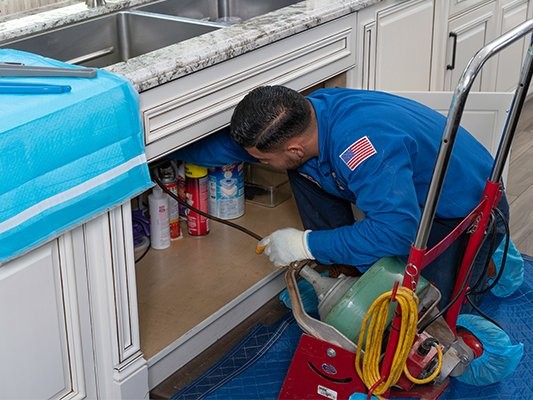
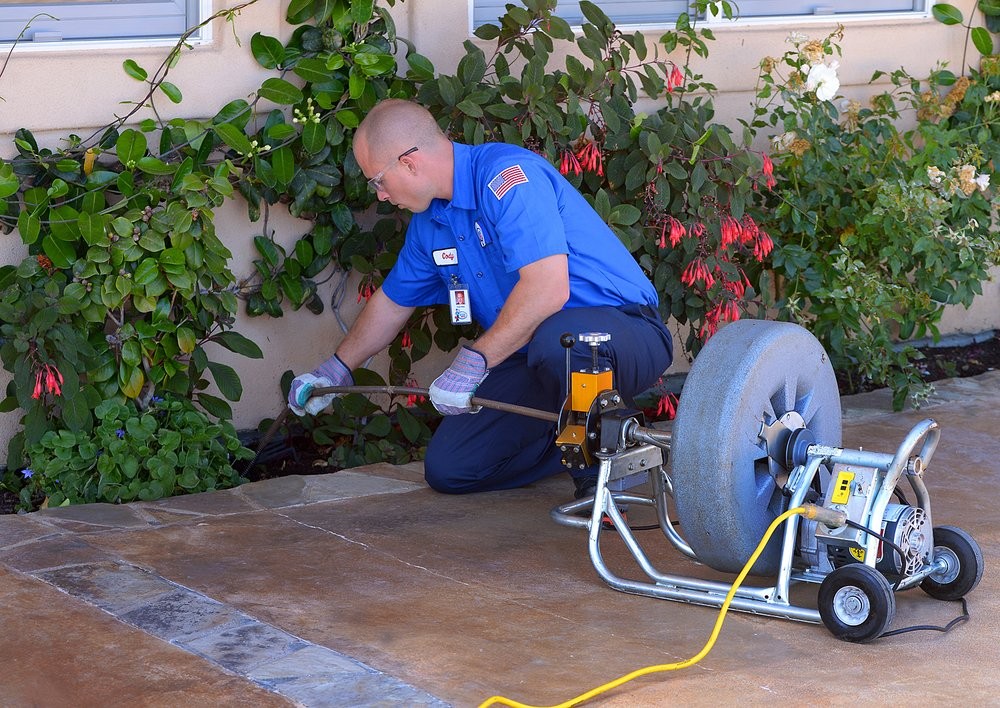
A professional drain snake — also called a motorized auger — works on the same principle as a hand unit, just with more reach and power. A long steel cable with a cutting head is fed into the drain line and driven forward until it breaks through or retrieves the obstruction. It's precise, relatively gentle on pipes, and effective for isolated clogs caused by toilet paper, hair, grease, or small debris.
Snaking is a good first-line professional solution for:
- Clogs localized to a single drain or fixture
- Recent, relatively soft blockages
- Older or more fragile pipes where high water pressure could cause stress
The limitation is that snaking punches a hole through a clog without necessarily clearing the pipe walls. Residual buildup stays in place and can contribute to the next clog forming faster.
Hydro Jetting
Hydro jetting uses a specialized nozzle connected to a high-pressure water line — typically 3,000 to 4,000 PSI — to blast the interior walls of your pipes clean. Unlike snaking, it doesn't just pierce the blockage; it scours the pipe from wall to wall, removing grease buildup, mineral deposits, and debris that have been accumulating for years.
Hydro jetting is the better choice for:
- Recurring clogs that keep coming back after snaking
- Heavy grease accumulation — particularly common in kitchen lines and restaurant plumbing
- Tree root intrusion, especially relevant in older OC neighborhoods with mature landscaping in Fullerton, Orange, and Yorba Linda
- Whole-line maintenance on older pipes where buildup has narrowed flow significantly
A video camera inspection is often performed before hydro jetting to confirm the location and nature of the blockage and ensure the pipe walls are in good enough condition to handle the pressure. If a camera reveals cracking, root damage, or pipe collapse, your plumber will recommend the appropriate repair before jetting proceeds.
Keeping Your Drains Clear: Prevention Tips for OC Homeowners
The best drain problem is the one that never happens. A few consistent habits go a long way:
- Use drain screens. Inexpensive mesh screens in shower drains and sinks catch hair, food particles, and debris before they enter the line.
- Watch what goes down the kitchen drain. Cooking grease is one of the most common contributors to main line clogs. Even in liquid form, grease coats pipe walls and accumulates rapidly. Pour it into a container and dispose of it in the trash.
- Be strict about what gets flushed. Toilets are designed to handle human waste and toilet paper — nothing else. Wipes labeled "flushable" are not actually safe for sewer lines and are a leading cause of main drain blockages in both residential homes and municipal systems across Orange County.
- Schedule routine professional drain cleaning. For most homes, an annual or biannual professional cleaning prevents the slow buildup that turns into an emergency. For homes in Irvine, Huntington Beach, Santa Ana, and other cities with older sewer infrastructure, this is especially worthwhile.
Need a Drain Cleaning Expert in Orange County?
Whether you're dealing with a slow drain, a full backup, or just want a professional inspection before things get worse, Rooter Hero Plumbing & Air serves homeowners and businesses throughout Orange County seven days a week, including weekends and holidays. Our team offers drain cleaning, hydro jetting, video camera inspections, and full sewer line services — with upfront pricing and no surprise fees.
Call us at (866) 941-8214 or schedule online — we're here to save your day.

.2603091544500.jpg)