

Hard Water in Phoenix: Why It Happens and What to Do About It
Spotty glasses, a film on your shower door, and skin that feels tight and dry no matter how much lotion you use. If that sounds familiar, you are not imagining it. Phoenix has some of the hardest tap water in the country, and it is working against your plumbing, your appliances, and your water bill every single day.
At Rooter Hero, we install and service water filtration and softening systems for homeowners throughout the Phoenix metro area. Below, we break down what makes Phoenix water so mineral heavy, how to spot the warning signs in your own home, and what your options are for getting cleaner, softer water out of every tap.
What Makes Phoenix Water So Hard?
Hard water simply means water that carries a high concentration of dissolved calcium and magnesium. The water that reaches Phoenix homes is drawn from a blend of sources, primarily the Salt River, the Verde River, and the Central Arizona Project canal, which carries Colorado River water into the Valley. As that water travels through Arizona's limestone and caliche rich terrain on its way to the tap, it picks up minerals along the way.
According to the City of Phoenix Water Services Department's own sampling, hardness levels across the city's water supply have measured in the range of roughly 10 to 16 grains per gallon (GPG), depending on the neighborhood and time of year. For context, the U.S. Department of the Interior classifies anything above 7 GPG as hard water, which puts Phoenix solidly in "hard" to "very hard" territory, and on the higher end of that range in many parts of the Valley.
Phoenix's desert climate makes the problem worse, not better. Scale forms faster in hot water, and with average water heater tank temperatures running warm and summer ground temperatures pushing incoming water temps higher than in milder climates, mineral deposits build up inside water heaters, faucets, and fixtures at an accelerated rate compared to cooler, wetter regions of the country.
Signs You're Dealing With Hard Water
Most Phoenix homeowners notice hard water through everyday annoyances before they think about it as a plumbing issue.
Common signs include:
- White, chalky residue on faucets, showerheads, and glass shower doors
- Spotty dishes and cloudy glassware, even straight out of the dishwasher
- Soap and shampoo that won't lather well, leaving skin and hair feeling dry or filmy
- Reduced water heater performance or a rumbling, popping sound as sediment builds up at the bottom of the tank
- Lower water pressure as scale narrows the inside diameter of pipes and fixtures over time
There is one hard water headache that is especially common in Phoenix: evaporative cooler buildup. Swamp coolers are popular throughout the Valley because they are cheap to run in our dry heat, but they rely on constant water evaporation, which means mineral deposits concentrate quickly on cooling pads and internal components. If you run a swamp cooler and notice it struggling to keep up by mid-summer, hard water scale is often part of the problem.
Older Phoenix Homes Face an Added Risk
The median home in the Phoenix metro area was built in the late 1980s, and plenty of homes in central Phoenix, Sun City, and other established neighborhoods date back to the 1950s and 1960s, when galvanized steel pipe was the standard. Galvanized pipe relies on a zinc coating to resist corrosion, but that coating breaks down over decades, and hard water accelerates the process by depositing mineral scale on top of the corrosion. The result is pipes that narrow from the inside, water pressure that drops gradually and then suddenly, and in some cases, water with a rusty or metallic taste.
If you own one of these older homes, hard water is not just a cosmetic issue. It is actively shortening the working life of pipes that may already be 50 to 70 years old. A water test and a conversation with a licensed Phoenix plumber can tell you whether a filtration or softening system, a partial repipe, or both make sense for your situation.
Hard Water vs. Soft Water: What Actually Changes
Soft water is water that has had calcium and magnesium removed, typically through an ion exchange process in a water softener, with sodium or potassium ions taking their place. Whole-home filtration systems can also reduce chlorine taste and odor, sediment, and other compounds depending on the system.
Once minerals are removed, most households notice the difference within days:
- Appliances last longer. Water heaters, dishwashers, and washing machines run more efficiently and avoid premature mineral buildup.
- Soap and detergent go further. Soft water lathers more easily, so you typically use less soap, shampoo, and dish detergent to get the same result.
- Skin and hair feel different. Many people notice less dryness and irritation after switching to soft water.
- Fewer spots and less scrubbing. Dishes, glassware, fixtures, and glass shower doors stay cleaner with less effort.
Hard water is not a health hazard. The calcium and magnesium in it are not dangerous to drink. The cost shows up elsewhere, in scale buildup, shortened appliance lifespans, and the extra time and product it takes to keep things clean.
Choosing the Right System for Your Phoenix Home
Not every home needs the same setup. A water test is the right starting point, since hardness levels can vary by neighborhood and even by well versus municipal supply in some unincorporated parts of the Valley.
From there, options generally include:
- Whole-home water softeners, which address hardness at every tap in the house
- Whole-home filtration systems, which can tackle chlorine taste, sediment, and other water quality concerns alongside hardness
- Combination systems, which pair softening with filtration for both water quality and water feel
- Point-of-use filters for drinking water, often paired with a whole-home system for a complete approach
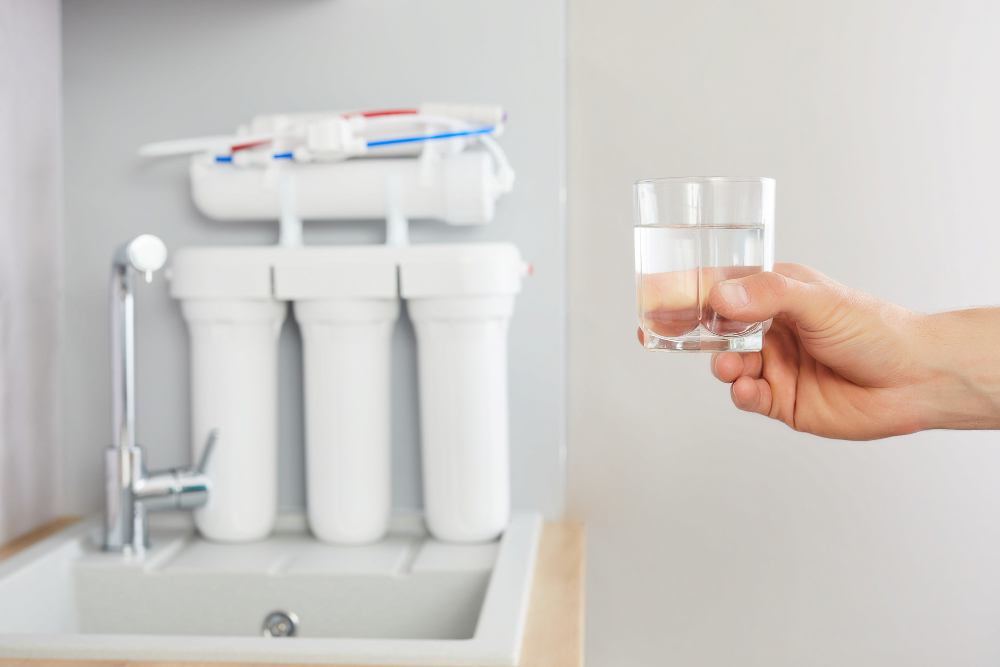
A licensed Phoenix plumber from Rooter Hero can test your water, walk you through what each option actually solves, and size a system correctly for your household's water usage and the hardness level specific to your area.
Why Phoenix Homeowners Choose Rooter Hero
- We test and diagnose hard water issues specific to Phoenix's water supply, not a generic nationwide average
- Our plumbers are familiar with the older galvanized and cast iron plumbing common in central Phoenix and other legacy neighborhoods, and know how hard water speeds up the wear on those systems
- We offer straightforward pricing and a written estimate before any work begins, with no surprise charges after hours
- From a single fixture fix to a full water filtration system installation, our team handles the job without passing you off to a subcontractor
Ready for Cleaner, Softer Water?
If you are tired of scrubbing spots off your dishes, topping off lotion after every shower, or watching your water heater struggle before its time, it is worth having your water tested. The team at Rooter Hero installs and services water filtration and softening systems throughout Phoenix and the surrounding Valley.
Contact our office to schedule a water quality consultation, system installation, or plumbing inspection for your home.