Discovering a slab leak can stop you in your tracks. Water beneath a concrete foundation is unsettling, and uncertainty about repair costs or structural damage can add even more stress. The good news is that you have several effective repair options available, each tailored for a different type of problem. With the right information—and professional support from Rooter Hero Plumbing & Air—you can make a confident and informed decision about protecting your home.
What a Slab Leak Is and Why It Requires Fast Action
A slab leak occurs when a water line beneath your concrete foundation breaks, cracks, or corrodes. Because the leak is hidden, it’s a good idea to notice the early signs. This concealed nature makes slab leaks especially risky. Water escapes into the soil beneath your home, which can cause the ground to erode or shift. This movement may lead to foundation instability, cracks, or uneven floors.
Slab leaks in Northern California are especially concerning because the region’s soil composition and subtle seismic activity can put pressure on pipes beneath a foundation. Even a small leak can quickly become a structural danger. Acting early—before water saturates the surrounding soil or weakens the slab—can avoid costly repairs that result from ignoring the problem.
Several common signs indicate you might have a slab leak developing. These include sudden increases in your water bill, warm spots on the floor, lowered water pressure, unexplained mold or mildew, or the sound of running water when all fixtures are turned off. When you notice these warning signs, the next step is to schedule a professional diagnosis to determine the location and severity of the problem.
How Professionals Diagnose a Slab Leak
Diagnosing a slab leak requires accuracy and the right tools. A modern inspection removes guesswork and avoids unnecessary digging inside the home. Technicians use multiple detection methods to get a clear view of what’s happening beneath the foundation.
Professionals usually rely on acoustic listening devices that detect the frequency of water movement through concrete. These tools amplify the sound of escaping water, even when the leak is several inches below the surface. Technicians might also use video camera inspections by inserting a specialized camera into the plumbing system to confirm the break visually. Pressure testing, infrared scanning, and moisture detection can also be employed to verify the leak's location.
This multilayered approach means the selected repair method is practical and tailored to your home's needs. Because no two slab leaks are the same, accurate diagnostics help your technician recommend the least invasive and most cost-effective repair option.
Method 1: Trenchless Pipelining (CIPP/Epoxy)
If you need a long-term solution that prevents major disruptions, pipelining may be the first option to consider. This method, known as CIPP (cured-in-place pipe lining), refurbishes the interior of your existing pipe without removing flooring or breaking through the foundation.
What Pipelining Is
Pipelining involves inserting a flexible, resin-coated liner into a damaged pipe. Once correctly positioned, technicians inflate it to press it firmly against the pipe walls. As the resin cures, it creates a new pipe inside the old one. This new pipe is strong, durable, and resistant to corrosion and future leaks.
The method is perfect for fixing long pipe sections or handling several problem spots at once. It enables technicians to restore an entire line instead of just patching a small area.
Advantages of Pipelining
Homeowners often select this method because it reduces disruption and provides long-lasting reliability.
Consider the following benefits:
- Minimal disruption to flooring and interior spaces
- Cleaner, faster repair process
- Long-term protection
- Effective for older plumbing
Limitations of Pipelining
Although pipelining is a versatile repair method, some situations require a different approach. It may not be feasible to use CIPP when pipes have completely collapsed or when the damage is too severe for a liner to adhere correctly.
Pipelining has limitations and may be ineffective in specific scenarios or may require additional considerations:
- Not suitable for crushed or fully collapsed pipes
- May require additional access points
- Ineffective for severe structural issues
Ideal Situations for Pipelining
Pipelining is most effective when the pipe is still structurally sound, the leak affects a larger section of plumbing, or you want to avoid invasive interior repairs. It is also an excellent choice for Northern California homes with older piping systems needing reinforcement without excavation.
Method 2: Tunneling Under the Slab
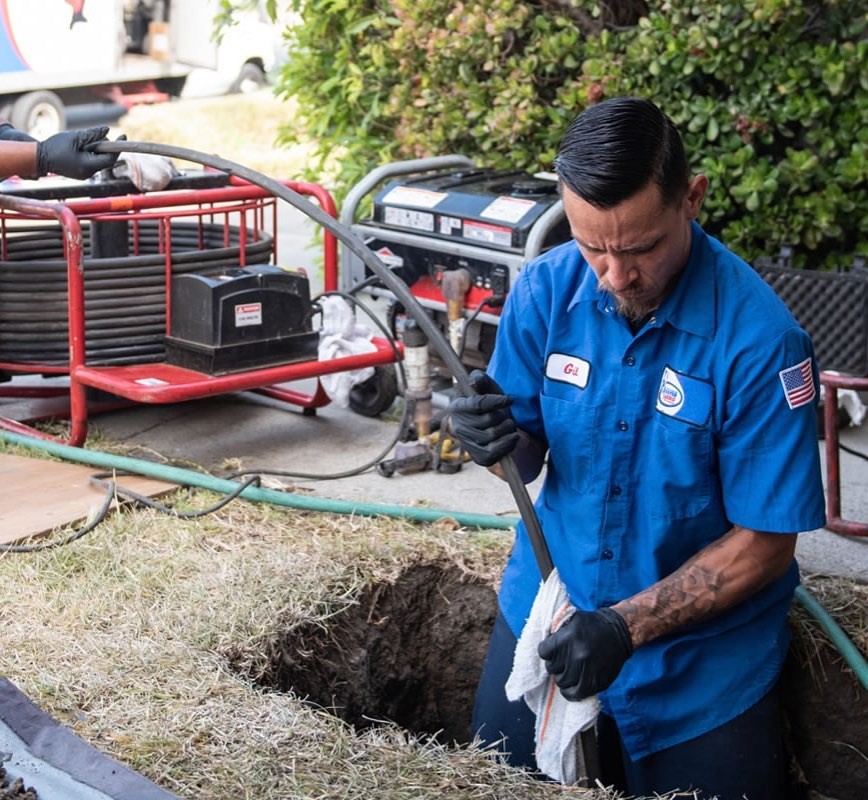
If you’re looking to protect your flooring, tunneling offers a solution that keeps all repairs outside. Instead of breaking through the slab, technicians dig a tunnel beneath the home to access the damaged pipe directly.
What Tunneling Is
Tunneling involves creating a controlled excavation from outside the home toward the leak. Workers carefully remove soil beneath the foundation to build a safe, supported tunnel. This method allows the pipe to be repaired or replaced without ever entering the living space.
Advantages of Tunneling
The main advantage of tunneling is its ability to safeguard your home’s interior. When the aim is to preserve floors, tile, cabinetry, or interior finishes, tunneling is frequently the preferred choice.
Tunneling is advantageous as follows:
- Protects interior flooring and finishes
- Allows full pipe replacement
- Minimizes household interruption
Limitations of Tunneling
Tunneling is effective but more labor-intensive than pipelining. It requires careful planning to maintain safety and minimize soil disruption.
Tunneling is limited because of the following:
- Longer repair timeline
- Cost varies with soil type
- Not ideal for every property layout
Ideal Situations for Tunneling
Tunneling is most effective when the leak is near the home's edge or when you want to avoid interior demolition. It also makes sense when multiple pipe sections need to be replaced entirely rather than reinforced with a lining.
Method 3: Jackhammer Spot Repair
Jackhammer repair is a traditional method and sometimes the most direct way to access a slab leak. Although it involves breaking through the slab, it is, in some cases, the most practical or budget-friendly option.
What Jackhammer Spot Repair Is
This method involves using a jackhammer to break through the concrete slab directly above the leak. Once technicians reach the pipe, they remove the damaged section and replace it with new piping. Afterward, the concrete is patched, and the affected flooring is restored.
Advantages of Jackhammer Repair
Spot repair is exact and provides a simple way to fix the leak when the problem is small and confined.
Jackhammer spot repair is beneficial in that it enables:
- Direct access to the pipe
- Effective for isolated leaks
- Lower initial cost
Limitations of Jackhammer Repair
Although effective, this approach is the most disruptive and often requires interior restoration.
The drawbacks of jackhammer repair include:
- Significant noise and dust
- Requires flooring demolition
- May not solve larger systemic issues
Ideal Situations for Jackhammer Repair
Jackhammering works well when the leak is small, the location is easy to access from inside the home, or the budget is limited. It is also an option when the rest of the pipe system is in good condition.
Comparing Pipelining, Tunneling, and Jackhammer Repair
Each repair method serves a different purpose, and selecting the right one depends on the pipe’s condition, location, and long-term requirements. You can benefit from comparing these options based on disruption, durability, and overall effectiveness.
The following is a brief overview of all three options:
- Pipelining – Non-invasive, long-lasting, ideal for stabilizing long pipe runs.
- Tunneling – Preserves interior flooring, best for perimeter leaks or full pipe replacements.
- Jackhammer repair – Direct and cost-effective for small, isolated leaks.
Understanding these distinctions helps you evaluate which solution aligns with your priorities.
How to Choose the Right Method for Your Northern California Home
Choosing the correct repair method depends on several factors. The leak's location, pipe accessibility, the age of the plumbing system, soil stability, and the condition of nearby pipes all influence the decision. An experienced technician assesses each of these aspects before suggesting a repair solution.
Considerations when deciding on a solution include:
- Pipe material and age – Older copper or galvanized piping may benefit more from pipelining or full replacement.
- Severity of the leak – Localized problems may be suitable for spot repair, while widespread corrosion may require a more comprehensive approach.
- Home layout – Accessibility of the leak determines whether tunneling or interior entry is more practical.
- Future reliability – Choosing a method that prevents recurring problems is often more cost-effective.
The appropriate repair is the one that restores safety, protects the foundation, and prevents additional damage.
Protect Your Home with the Right Slab Leak Repair Strategy
Slab leaks are a serious issue, but they don’t have to turn into a major disaster. When you understand the differences between pipelining, tunneling, and jackhammer repair, choosing the right approach becomes much easier. A trusted professional can guide you through the process, perform the repair correctly, and help safeguard your home against future issues.
For reliable, knowledgeable support at every step, you can count on Rooter Hero Plumbing & Air to help restore your plumbing system with confidence and care. Contact us at (866) 941-8214.

.jpg.2602061424199.webp)
.2512171224134.jpg)