Ways to Troubleshoot Low Water Pressure in Outdoor Spaces
Springtime is the season of blossoming flowers, lush lawns, and vibrant gardens. As you jump into outdoor activities like gardening and lawn care, running into low water pressure in your garden hose can quickly put a damper on your plans. That weak trickle from the hose is not just frustrating; it can also hinder proper watering and impact the health of your plants.
In this brief article brought to you by Rooter Hero, we'll walk through common causes of low water pressure in garden hoses and share practical tips to troubleshoot and fix the issue. If you’d rather have a plumber investigate, then call Rooter Hero to schedule a convenient appointment.
Understanding Why Your Garden Hose Has Low Water Pressure
Low water pressure in garden hoses can be due to one of, or a combination of, several factors.
First, there’s the possibility of blocked pipes. Just like a clogged drain can slow down your sink's drainage, the sediment, mineral deposits, or debris in the water line leading to your outdoor faucet can restrict water flow and result in weak pressure.
Low water pressure may also be due to valve troubles. Imagine turning on a faucet only to find it barely open; that's what can happen with malfunctioning or partially closed valves such as the shut-off valve or pressure-reducing valve.
It may also be that the water supply is being split. Unseen leaks in the water supply line, pipes, fittings, or hose connections can be sneaky culprits, causing water loss and reduced pressure over time.
Finally, the issue may be to do with the hose itself. Much like an old, worn-out jacket that needs replacing, your garden hose might have seen better days as kinks, leaks, or damaged fittings contribute to low pressure.
Steps to Troubleshoot and Revive Your Garden Hose's Water Pressure
As you now know, there are may possible culprits. Troubleshooting will help you get to the bottom of it:
- Take a moment to test water pressure at other faucets indoors. If they're also sluggish, the issue may be broader.
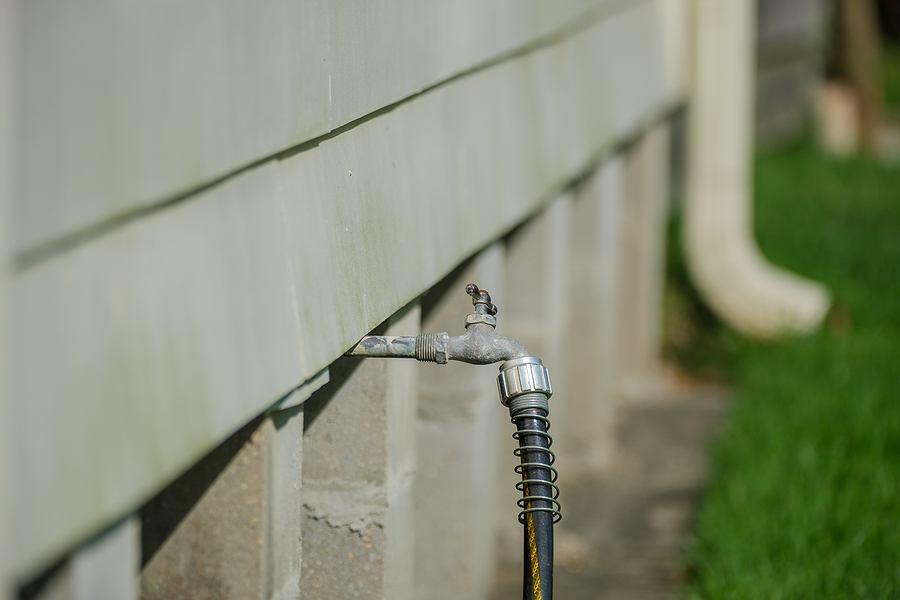
- Inspect your garden hose for twists, kinks, leaks, or damage, and check the outdoor faucet for visible leaks or blockages. Sometimes, a little cleaning or hose repositioning can work wonders.
- Confirm that any shut-off valves connected to your outdoor faucet are completely open.
- If your property has a pressure-reducing valve (PRV), check its settings and functionality. Adjustments or repairs may be needed to optimize water pressure.
- Use a pressure gauge to measure water pressure specifically at your outdoor faucet. Compare the reading to typical pressure levels (around 40-60 psi).
- Use a pipe snake or plumber's auger to clear any stubborn clogs or obstructions in the water pipes serving your outdoor faucet.
When to Call a Plumber
If your DIY efforts don't do the trick, don't hesitate to reach out to a trained plumber. Rooter Hero’s plumbing service is both reliable and affordable. We also offer emergency plumbing repair service if you need a local plumber NOW.

.jpg.2602061424199.webp)
.2512171224134.jpg)